
SSD CARDS
Solid-state Devices (SSDs) are flash-based storage technologies that are also called Disks because they are often interfaced with a host system like a hard disk. SSDs are typically silent, resistant to physical shock, and have higher input/output rates.
SanDisk Corporation (then SunDisk) saw the potential of flash memory as an alternative to existing hard drives and filed a patent for a flash-based SSD in 1989. Two years later it shipped the first commercial flash-based SSD. In 1998, SanDisk introduced SSDs in 2.5-inch and 3.5-inch form factors with PATA interfaces. 2.5 inch SSDs are among the most common SSDs today, but M.2 form factors are gaining popularity for their smaller size and higher capacity.
PATA (Parallel Advanced Technology Attachment), or IDE (Integrated Drive Electronics), is a standard interface designed for IBM PC-compatible computers. It was first developed by Western Digital and Compaq in 1986 for compatible hard drives and CD or DVD drives. It sends 16 bits at a time through a single 16-bit connection, which is used for data traveling in both directions.
USB is the most popular for external SSDs, SD cards, and USB flash drives, but it has its limitations as it is a slow connection.
SATA (Serial ATA) is a storage interface that sends data one bit at a time down a single connection in each direction instead of a 16-bit word. SATA has three main advantages: a higher data transfer rate, simplified cable routing, and the ability to exchange data carriers during operation (hot swapping). Originally developed in 2000, SATA has seen several iterations, with SATA III being the most current.
PCIe (Peripheral Component Interconnect Express) is a high-speed storage interface designed specifically for SSDs. The advantage over SATA is the ability to transmit data on up to four lanes, whereas SATA only has one. PCIe has numerous improvements over the older standards, including higher maximum system bus throughput, lower I/O pin count and smaller physical footprint, a more detailed error detection and reporting mechanism (Advanced Error Reporting, AER), and native hot-swap functionality. More recent revisions of the PCIe standard provide hardware support for I/O virtualization.
NVMe (Non-Volatile Memory Express) is a communication protocol designed specifically to work with flash memory using the PCIe interface. Combining the NVMe SSD and the PCIe connection results in read and write speeds that are four times faster than a SATA interface/SSD.
We offer SSDs from the following memory manufacturers:




SSDs SATA 2.5” & HalfSlim (MO-297)
Capacity: SLC 1G-64G, 3D pSLC 16GB ~2TB, 3D TLC 16G~8T
SATA 3 (6 Gbit/s) interface
Global wear-leveling technology and block management
Built-in ATA Secure Erase, CoreSecurity, and S.M.A.R.T. functions
Supports DEVSLP (optional)
Supports wide temperatures
TRIM and NCQ commands available
Built-in thermal sensor (optional)
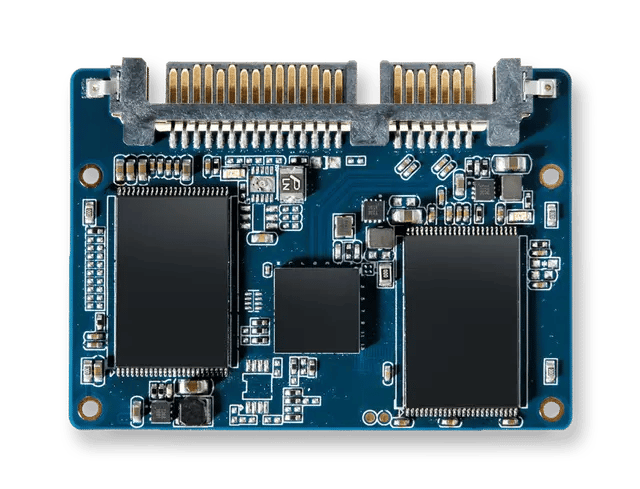
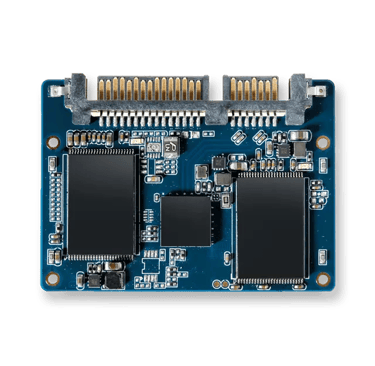
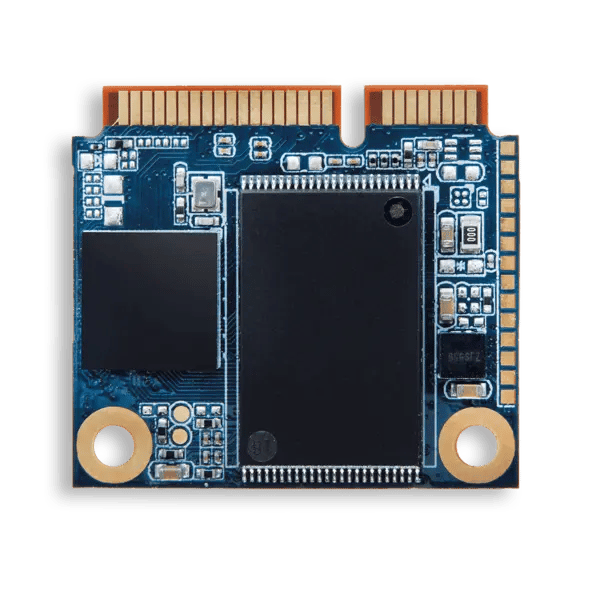
mSATA - MO-300 & MO-300B
Capacity: SLC 1G-64G, 3D pSLC 16~256GB, 3D TLC 16G~1T
Global wear-leveling technology and block management
Built-in ATA Secure Erase, Write Protect, and S.M.A.R.T. functions
Wide temperatures and thermal sensor supported
Supports DEVSLP (optional)
TRIM command available
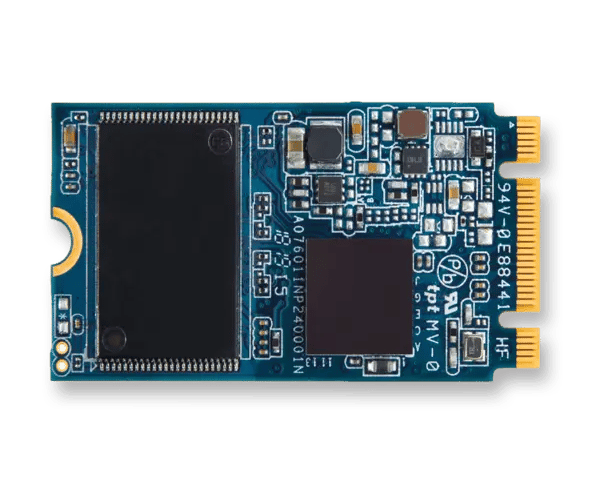
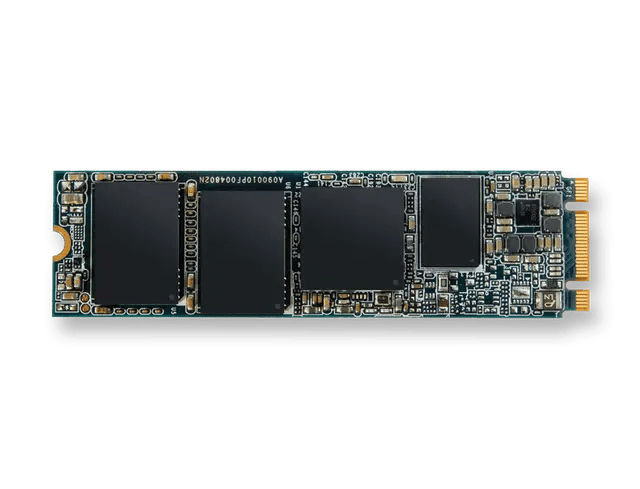
M.2 (NGFF) - 2242 & 2280
Capacity: SLC 4G-64G, 3D pSLC 8GB~512GB, 3D TLC 32GB~2TB
SATA 3 (6 Gbit/s) interface M.2 (NGFF) connector
Advanced wear-leaveling and bad block management
Built-in ATA Secure Erase and S.M.A.R.T. functions
TRIM command available • Supports DEVSLP (optional)
AES/TCG OPAL (optional)
U.2 and M.2 PCIe Gen3x4/Gen4x4 NVMe - 2280
Read up to 3450MB/s
Write up to 3000MB/s
Advanced wear-leaveling and bad block management
End to end data path protection
Thermal throttling
TCG OPAL/Pyrite (Optional)
HeadQuater
Av. Presidente Juscelio Kubitschek, 1909-Torre Sul, 10 andar, 0455-065, Sao Paulo, Brazil
Contacts
+55 11 95846 3995
info@apexmemory.tech
Branches
- 1388 Kifer Road Sunnyvale, CA 94086. USA
- 2-16-5 Konan, Minato-ku, Tokyo, 108-0075 Japan
- Tamara-Danz-Straße 2, 10243 Berlin, Germany
- 41 sir Lowry road, Woodstock cape town, South Africa
Exclusive Online Shopping Experience
Our products are available for purchase exclusively through our website. We do not operate as a physical retail store and, as such, do not offer in-store shopping options.
We pride ourselves on customer loyalty as a result of great pre & post sale service. All products are covered by manufacturer warranty. Customer service is our credo.