
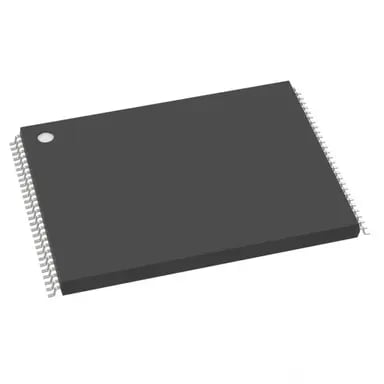
eMMC for embedded, IoT & Automotive
The standard for embedded MultiMediaCards (eMMCs) was finalized by JEDEC in 2006 and has been designed for portable devices or IoT sensors. It integrates the controller and the flash memory in a single IC so the controller and the related firmware take care of placing data into storage.
This takes away the burden of raw flash management (i.e. wear leveling, error correction). Due to this It is the ideal replacement for raw flash in many applications.
Designed for a wide range of applications (consumer electronics, mobile phones, handheld computers, navigational systems, etc), the small BGA package sizes and low power consumption make eMMC an excellent low-cost memory solution for any space-constrained applications such as mobile devices.
MEMPHIS Electronic offers eMMC components von BiWIN, ESMT, Etron, Intelligent Memory, Longsys, and Skyhigh Memory. The big memory manufacturers, Samsung, Micron und SK Hynix, are exiting the market.
Time to qualify alternatives now!







Density: 1GB – 256GB












Speed: up to 400Mb/s
Operating Temp: commercial, industrial and automotive temp.
Packages: BGA100, BGA153
Voltage: 1.8V/3.3V
Variants: SLC / MLC
Other features:
Integrated ECC
Bad Block Management
Power Failure Protection (optional)
Secure Erase, TRIM support
Data Retention: typically 10 years at 25°C and moderate write cycles
eMMC vs. UFS vs. SSD
Simpler design: Host doesn't require flash management algorythms
Compact BGA package (11,5 x 13 mm, 12 x 16 mm, 14 x 18 mm)
Standard Interface: easy to replace manufacturers
Small footprint
Cost-efficient compared to other memory alternatives
When to choose eMMC instead of UFS?
eMMC is the right choice when:
Moderate performance suffices (IoT, Embedded-Linux)
Costs are a key consideration
Simple integration is desired
Reliability is more important than maximum speed
PCB complexity should be kept at a minimum
UFS is ideal when:
High performance is required (High-End-Smartphones, Automotive ADAS)
Random-I/O-Performance is critical
Budget is available for premium solution
Typical eMMC Applications
eMMC has become the go-to memory for a variety of embedded appications.
IOT Devices & Edge Computing benefit from eMMC
Smart Home Gateways and hubs
IoT Sensors with local data storage
Edge Computing Nodes
Industrial-IoT (IIoT) Gateways
Benefits: Low cost, low power consumption and enough performance for IoT workloads
eMMC in Embedded Systems & Single Board Computers
Raspberry Pi and similar SBCs
Embedded Linux systems
Set Top Boxes
Digital Signage Displays
eMMC replaces traditional SD cards and provide higher reliability.
Automotive Embedded Systems deploy eMMC in:
Infotainment systems (entry level to mid range)
Digital Instrument Cluster
Telematics Control Units (TCU)
Body Control Modules
Rear Seat Entertainment
Industrial PCs & HMI
Human Machine Interfaces (HMI)
Industrie Panel PCs
Industrial Gateway Controller
Embedded Vision systems
Medical Devices & Medical Applications:
Portable Medical devices
Health Monitoring systems
Diagnostic equipment
Point-of-Care devices
Consumer Devices:
Budget tablets and entry level smartphones
Wearables (Smartwatches, Fitness-Tracker)
Action cameras and dashcams
Portable Media Player
Augumented Reality / Virtual Reality
Network Equipment:
Router and Access Points
Switches (managed/unmanaged)
5G/LTE Modems
Small cell base stations
What Advantages Does eMMC Offer Compared to Other Flash Technologies?
Unlike raw NAND, eMMC does not require a dedicated flash management implementation at system level. The integrated controller handles all essential flash management functions, including wear leveling, error correction, and bad block management.
This significantly reduces development effort and risk while ensuring stable performance, improved data integrity, and faster time to market.
eMMC is also more cost effective and easier to integrate than UFS or NVMe. While UFS and NVMe enable significantly higher data rates, eMMC is optimized for applications where reliability, longevity, and a balanced cost to performance ratio are more important than maximum throughput.
Which Applications Is eMMC Best Suited For – and When Is It Not?
eMMC is ideally suited for applications with:
Moderate storage requirements
Long product lifecycles
High demands on reliability and availability
Typical use cases include industrial automation, medical devices, IoT gateways, smart devices, and automotive electronics.
For data intensive applications with very high performance requirements—such as high end consumer devices or AI workloads—technologies like UFS or NVMe are the better choice.
What Is the Typical Lifetime of eMMC?
The typical service life of eMMC is generally specified as 5 to 10 years. This wide range exists because lifetime depends not on age, but on write workload, which in turn varies depending on the NAND type used.
Program/Erase (P/E) Cycles
SLC NAND: 50,000–100,000 cycles (rare in eMMC)
MLC NAND: 3,000–10,000 cycles (industrial grade)
TLC NAND: 1,000–3,000 cycles (consumer grade)
Thanks to wear leveling, the controller distributes write operations evenly across memory cells, significantly extending usable lifetime.
Example Calculation:
16 GB eMMC using MLC NAND (5,000 P/E cycles)
Theoretical write endurance: 16 GB × 5,000 = 80 TB
At 10 GB writes per day: 80,000 GB / 10 GB = 8,000 days ≈ 22 years
In real world embedded and industrial applications, this typically translates to a usable lifetime of 5 to 10 years, and often 10+ years when daily write volumes remain moderate.
Is eMMC Still Future Proof Even Though Some Manufacturers Are Exiting the Market?
Yes. Despite some manufacturers withdrawing from the eMMC market, eMMC remains essential for many industrial and embedded applications.
These applications do not require high storage densities, but rather stable, durable, and long term available memory solutions. eMMC continues to meet these requirements, especially in systems with long product lifecycles.
We work with several manufacturers that are committed to supporting eMMC over the long term.
Contact us to discuss your requirements.
HeadQuater
169 Great Portland St, London W1W 5PF, United Kingdom
Contacts
info@apexmemory.tech
Branche
Calle Menorca 18, 46023 Valencia, Spain
Exclusive Online Shopping Experience
Our products are available for purchase exclusively through our website. We do not operate as a physical retail store and, as such, do not offer in-store shopping options.
We pride ourselves on customer loyalty as a result of great pre & post sale service. All products are covered by manufacturer warranty. Customer service is our credo.